
How to Increase Perceived Value (And Why It Matters More Than Actual Value)
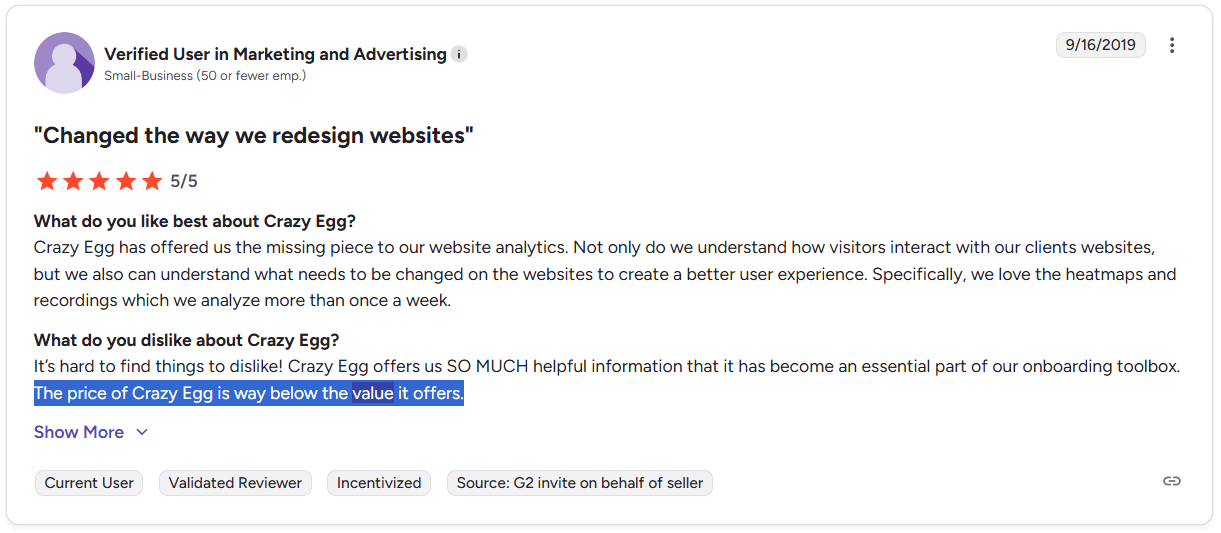

Perceived value is what customers think your product or service is worth compared to the perceived costs and competitors, which affects how much they’re willing to pay for it.
In this article, I’ll break down how perceived value works, how to measure it, and six ways to increase it.
What is perceived value?
Perceived value is a marketing term describing the worth a customer assigns to your product based on how well they believe it can satisfy their needs.
The word ‘believe’ is key.
Customers decide what the product is worth to them based on signals like messaging, pricing, brand, or reviews, not on its actual value.
What’s the difference between perceived and actual value?
Perceived value is what the customer believes the product is worth, while actual value is what the product objectively delivers — specs, durability, performance, results.
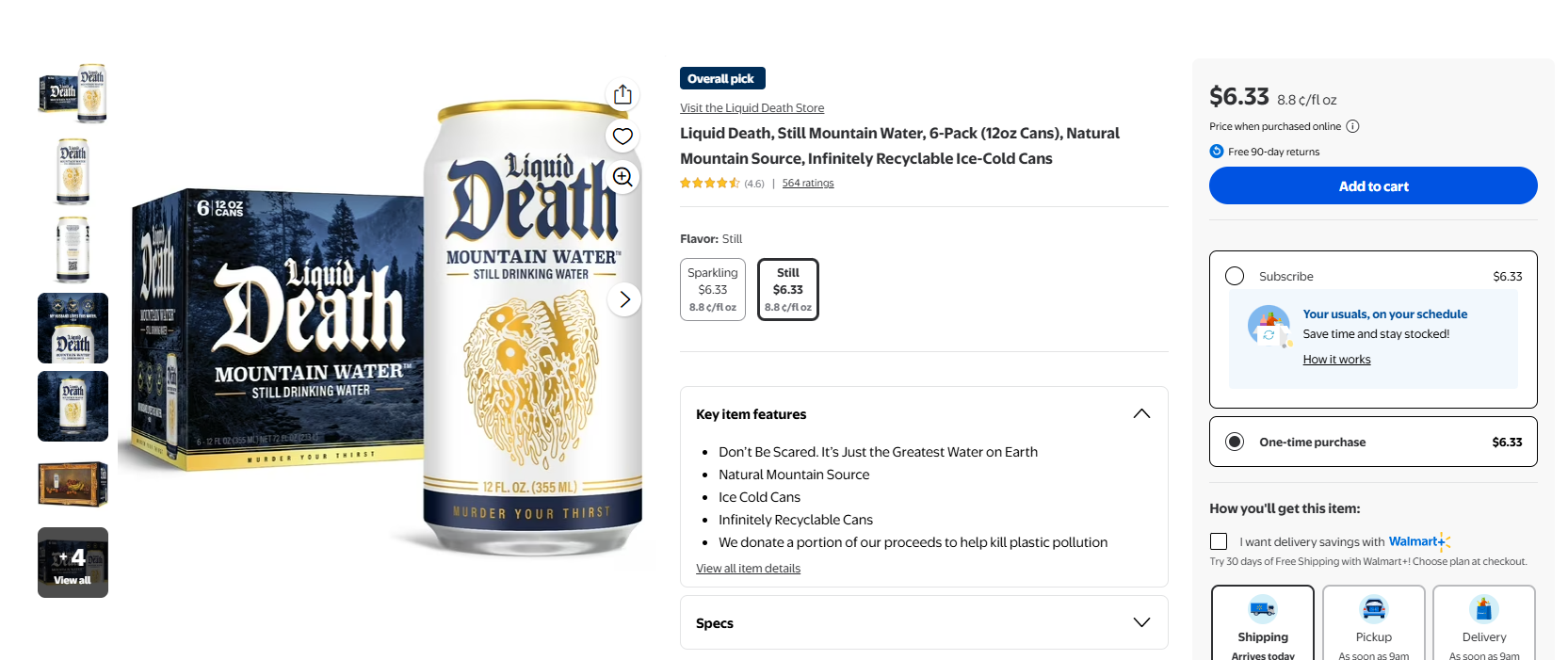
For example, the actual value of Liquid Death water is the same as that of any other still water. They all hydrate and quell thirst.
But the perceived value of Liquid Death is higher due to its branding and novelty, and people are happy to pay 2-3x more.
What’s the difference between perceived value and perceived price?
Perceived price is how the customer feels about the price: whether it seems expensive, cheap, fair, or like a deal, based on context, framing, and comparison.
A $5 bottle of water feels expensive at the grocery store but reasonable at an airport. The product is identical, and its actual value is the same. The price perception shifts because the reference point — what customers expect to pay in that context — is different.
Perceived price can affect the perceived value. If it seems too high relative or too low relative to the category, the perceived value drops.
Why does customer perceived value matter?
Perceived value decides whether customers buy, how much they’ll pay, and whether they’ll come back.
When customers feel the product delivers enough value, they buy. When they don’t, they walk.
When they buy, the perceived value affects how much they are willing to pay.
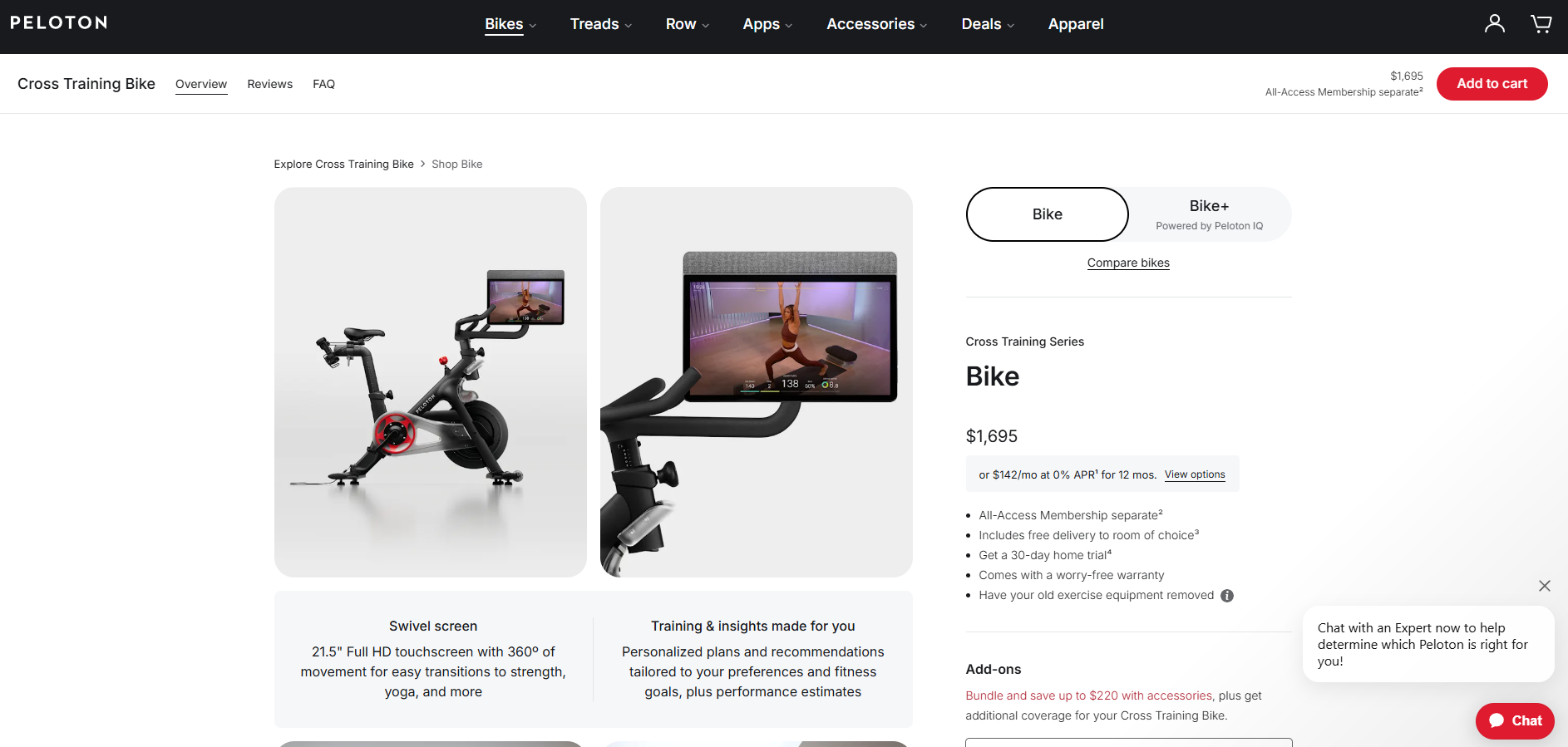
On Amazon, an exercise bike costs $150-250. Peloton bikes are $1,695-2,695 plus a monthly class subscription. Around 10x more, and people still buy them because, in their eyes, Peloton is worth the money.
Perceived value also impacts customer retention.
If the product meets their expectations or the company delivers a satisfying experience, they’re more likely to purchase again or keep paying subscription fees.
So, in business terms, perceived value matters more than actual value. As long as the product works, its perception determines the profit margins.
Different types of perceived value
Customers weigh value differently, depending on the purchase and their context.
Customers buy because of:
- Functional value — What the product does and how well it does it (quality, durability, performance)
- Emotional/hedonic value — How the product makes the customer feel (joy, pride, nostalgia, belonging)
- Social/sign value — What owning or using it signals to others (status, identity, affiliation)
- Monetary value — Whether the price feels fair or like a deal (value for money, ROI)
- Convenience value — Time and effort saved (ease of use, speed, accessibility)
- Ethical value — Whether the purchase aligns with the customer’s values (sustainability, purpose, impact)
How to measure perceived value
There’s no single way to measure perceived value. Businesses use a range of qualitative and quantitative tactics to assess consumers’ perception of their products.
Run customer surveys
Customer surveys are the simplest way to gauge how customers perceive the value of a product throughout their journey.
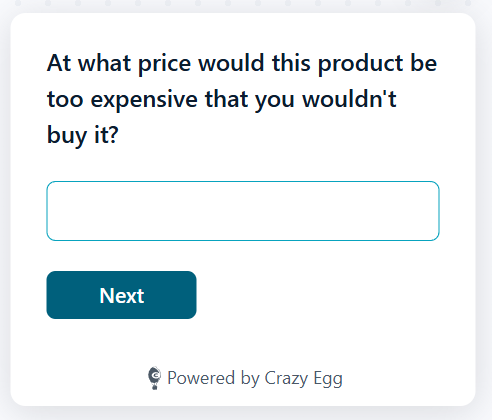
The Van Westendorp Price Sensitivity Meter is commonly used for pricing research. It uses four questions to map the perceived customer value range:
After the purchase, survey customers about the alternatives they considered and why they chose your product, and how they rate the product value:
- What other products did you consider?
- Why did you choose our product?
- How satisfied are you with the value you’re getting from our product?
- If we increased the price of the product by [10]%, would you still buy it?
- On a scale of 0 to 10, how likely are you to recommend our product to your friends/colleagues? (The NPS survey, an established measure of customer loyalty)
When customers churn, focus on the value gap:
- On a scale of 1 to 7, how well did our product satisfy your expectations?
- Why did you choose to cancel your subscription?
Talk to customers in focus groups and interviews
Focus groups and interviews allow you to gather deeper qualitative insights into the why behind customers’ value perceptions.
Focus groups are useful for:
- Testing pricing and positioning before launch
- Comparing reactions to your product vs. competitors
- Uncovering the language people use around value
One-on-one interviews go deeper when you need to understand an individual customer’s value calculation. Run three types:
- Prospects who didn’t buy: what perceived cost or missing benefit killed the deal
- Recent customers: what tipped the value calculation in your favor
- Churned customers: where the perception-reality gap opened after purchase
Beware that surveys, focus groups, and interviews don’t always give an accurate representation of reality. People don’t always understand their motivations or want to reveal them publicly. So use other methods to triangulate results.
Use web analytics and behavior tracking
How users navigate your website can give you insights into how they perceive the product value.
Metrics that can help you determine a product’s perceived value include:
- Landing page bounce rates — High rates indicate the value proposition doesn’t resonate or there’s a mismatch with what they expected
- Pricing and product page exit rates — When customers leave after seeing the price, the perceived value might be too low for the cost
- Conversion rate — High conversion rates indicate the product delivers high value relative to price
For more granular insights, combine the above with behavioral analytics techniques.
For example, scroll maps can reveal if customers explore pricing in detail, while heatmaps show what they pay attention to.

Monitor customer reviews and forums
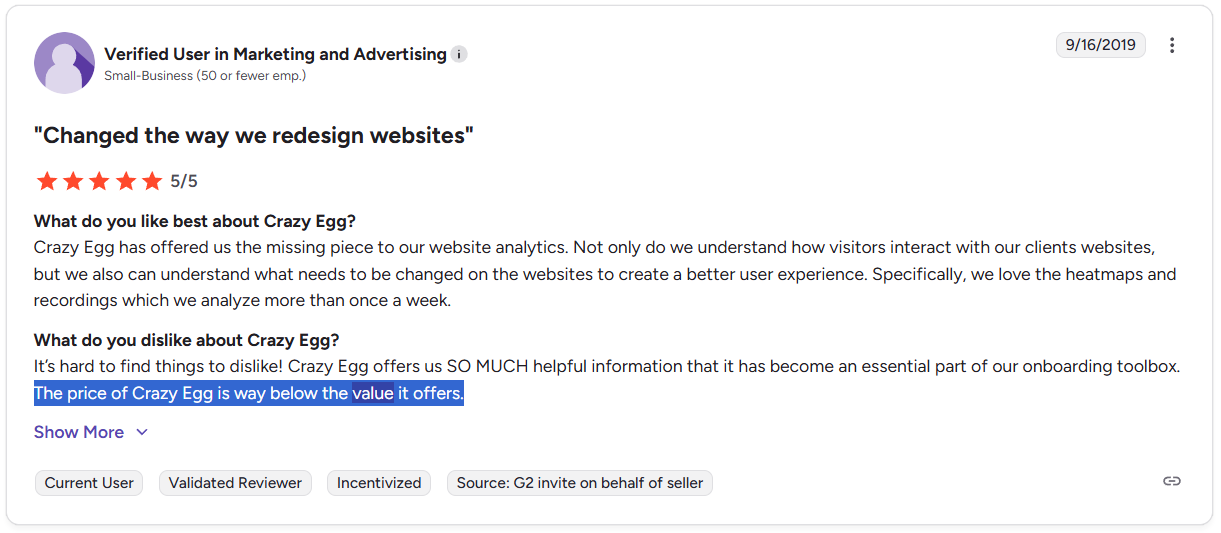
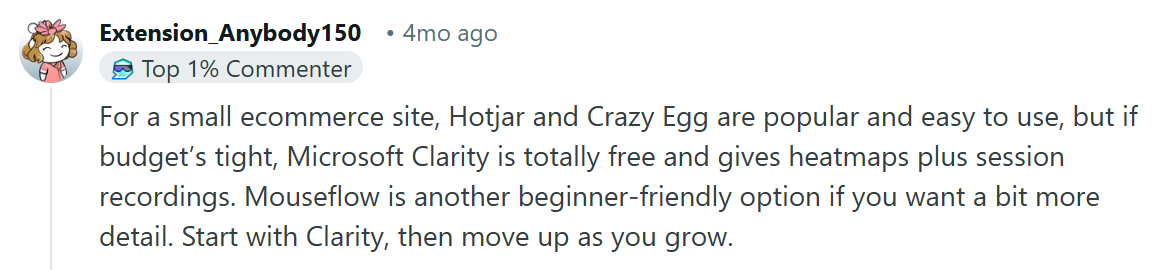
Mining reviews and forum discussions is the cheapest way to see what drives product value perception, and how users evaluate the product against alternatives.
Where to look?
- Product forums: Buyers can reveal discrepancies between perceived and real value.
- Reddit and Quora: Unprompted and often brutal insights.
- Review platforms: G2, Capterra, and Trustpilot for B2B software; Amazon, Trustpilot, and Yelp for consumer products.
What to look for?
- Switching stories — “I switched from X because…” or “I tried Y, came back to X” directly compares perceived value across products.
- Value language patterns — Which benefits do happy customers mention most? Which complaints come up for churners?
- Price-value mismatches — Reviews praising the product but flagging the price (or vice versa) reveal gaps in pricing or positioning.
- Competitor mentions — Names customers bring up without being asked reveal who you’re really competing against.
Tap into sales data
Your own sales data contains clear objective perceived value signals.
Metrics that reveal perceived value:
- Average order value (AOV) — Larger baskets mean customers see enough value to add more items or upgrade to a higher tier.
- Repeat purchase rate — Customers come back when they perceive continued value. A drop signals that the post-purchase experience didn’t reinforce the initial perception.
- Customer lifetime value (LTV) — The cumulative measure of ongoing perceived value. Low LTV means customers don’t perceive enough value to keep paying.
- Churn rate — In SaaS and subscriptions, churn is the most direct signal of perceived value falling below perceived cost.
- Upsells — Customers willingly paying more for a higher tier confirm your value ladder is compelling.
- Discount dependency — If sales plateau without promotions, full-price perceived value isn’t strong enough.
- Call transcripts — Sales calls reveal a lot about how customers perceive the product and competitors.
How to increase the perceived value of your product
Each factor below shapes how customers perceive your product’s value — and each one is a lever you can pull.
1. Optimize your pricing strategy
Perceived value impacts pricing, but pricing also affects the perceived value of a product.
Customers use price as a shortcut for quality. When they don’t know a product well, the number on the tag tells them what to expect.
A premium price indicates superior quality and exclusivity. A budget price — a bargain.
Unless the price is too low. A product priced well below the category norm triggers suspicion. If it’s that cheap, what’s wrong with it?
How to use price to increase perceived value:
- Use value-based pricing: Showing how much money the product can make or how much time it can save vs its actual cost frames it as a good deal.
- Reframe the cost. Breaking an annual subscription into a daily equivalent (“less than a coffee a day”) changes the perceived cost without changing the actual price.
- Use anchoring and the decoy effect. A $99 plan next to a $499 plan feels like a deal. A fully-specced model for $499 seems a no-brainer if another model with half the features is $449.
- Combine premium pricing with scarcity. Limited availability at a high price signals exclusivity. Apple famously did this with early iPhone launches, driving people to camp outside stores.
- Bundle with care. Selling premium and cheap products together can lower value perception. To protect the price of the more expensive product, offer the cheaper one as an optional add-on or bundle products priced similarly.
- Discount cautiously. Frequent discounts and never-ending “limited” offers lower perceived value.
2. Build a strong brand
When a brand has earned a reputation, for example, for quality, customers apply that reputation to everything it sells. This halo effect explains how Leica or Mercedes can command premium prices even when competing products match their specs.
How to build your brand to increase perceived value:
- Stay consistent. Consistent messaging across every channel builds trust. Inconsistency erodes the value signal.
- Deliver reliably. Brand reputation is built through repeated delivery, not campaigns. Each interaction that meets expectations reinforces perceived value.
- Protect your associations. Be selective about partnerships, endorsements, and where the product is sold. Context shapes perception — the same product in a premium environment is perceived differently than in a discount channel.
- Align with customer values. Corporate altruism raises perceived value — 49% of consumers paid more for sustainably branded products, at an average premium of 59% (IBM, 2022). That’s how Patagonia commands premium prices over budget equivalents of similar quality.

3. Leverage social proof and word of mouth
Social proof and word of mouth drive perceived value. When customers see that others are satisfied with a product, their perception of its value goes up.
How to use social proof to increase perceived value:
- Collect and display reviews on product and pricing pages.
- Use customer testimonials. Testimonials from satisfied customers show that the product is worth the money.
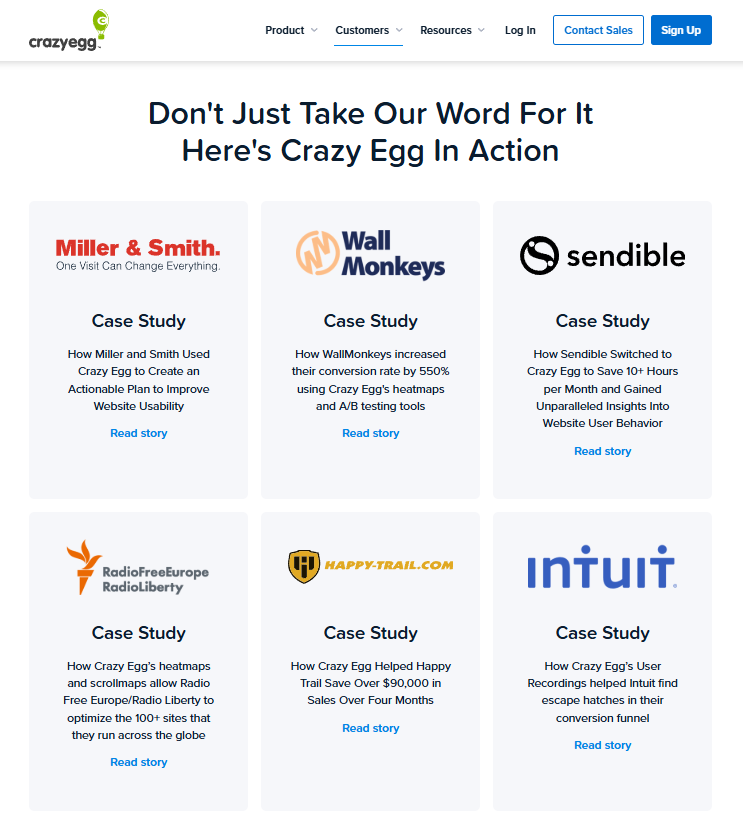
- Add logos. Recognizable customer logos add credibility. If it’s good for them, it must be really good — and buyers feel they’re joining an elite group.
- Share customer success stories with outcome metrics. Case studies with specific results drive value perception by demonstrating real-life product benefits.
4. Reduce perceived risk
Social proof reduces perceived risk, which research shows negatively affects value perception.
For example, Yu Wang et al. (2019) found that perceived risk lowers perceived value in ride-sharing, and Xianfeng Hu et al. (2023) saw the same pattern with electric vehicles. The rule holds broadly: lower perceived risk = higher perceived value.
How else can you derisk purchase decisions?
- Offer money-back guarantees, free trials, and free returns
- Use trust signals, like security badges, clear contact information, professional presentation, or industry certifications.
5. Improve the customer experience
User experience at every stage — from first website visit to onboarding to daily use — shapes how customers perceive the product’s value.
Qualtrics XM Institute (2025) found that 72% of consumers are ready to pay higher prices for a better experience. 29% of consumers stopped using or buying a product because of a bad experience (PwC, 2025).
How you improve user experience depends a lot on the product and distribution channels.
Here are a few examples:
- Build a fast, reliable website so customers can easily find what they need and complete purchases safely and quickly.
- Reduce friction. Save customers’ time and stress with features like one-click purchase or single sign-on (SSO).
- Invest in onboarding to help customers realize the product value, especially for complex products, like enterprise SaaS solutions.
- Improve support. Response time, ease of contact, and resolution quality help customers achieve their goals quickly and show your commitment to customer satisfaction.
6. Invest in design and presentation
Design signals quality before the customer ever uses the product. Packaging, typography, product aesthetics, and visual craft tell buyers how much care went into what they’re buying — and, by extension, what it’s worth.
That’s why Moleskine can charge $25–$40 for a notebook, even when a functionally identical ones at Staples cost $5.
How to use design to increase perceived value:
- Invest in product and packaging design. They create first impressions that anchor the rest of the relationship.
- Match design quality to price positioning. Premium pricing paired with a budget-looking design creates a mismatch that customers read as “something’s off.”
- Don’t neglect secondary materials. Sloppy invoices, proposals, or email templates erode the perceived value built elsewhere.
- Refresh regularly. If your packaging or visual assets look like they’re from a different era, that’s how customers perceive the product.
Final thoughts
Two products with identical performance routinely command different prices and market positions based purely on how customers perceive them. That’s why the biggest gains in pricing and profit margins come from working on perception, not just product.
Actual value is the floor, perceived value — the ceiling. The product has to work, but how high you can price, how many customers choose you, and how willingly they come back depend on their perception.
Both matter, but in market outcomes, the latter does the heavy lifting.
If you’re looking to optimize the user experience on your website or e-commerce shop, Crazy Egg can help you make informed decisions with heatmaps, session recordings, surveys, A/B testing, and web analytics. Start your free trial today!

